
IT International Academy
🚀 Empowering Future AI Professionals
Master AI. Build the Future. Transform Your Career.

Welcome to the Modern Artificial Intelligence Programme offered by IT International Academy. This programme has been carefully designed to prepare learners for a world where Artificial Intelligence is becoming an essential part of education, business, healthcare, finance, cybersecurity, engineering, agriculture, software development, and everyday life.
Unlike traditional AI courses that focus mainly on theory or programming, this programme places a strong emphasis on practical AI skills. You will learn how to use modern AI tools responsibly, efficiently, and professionally to solve real-world problems, improve productivity, create innovative solutions, and unlock new career opportunities.
Throughout this course, you will discover that Artificial Intelligence is more than just a chatbot. It is a powerful assistant capable of helping you analyse information, create professional documents, generate business ideas, write software, automate repetitive tasks, produce creative content, and support informed decision-making.
By the end of this programme, AI will become one of your most valuable professional tools, enabling you to work smarter, learn faster, and create more value in your personal and professional life.
🤖 AI Discovery #1:
Before continuing with this module, open your favourite Artificial Intelligence assistant such as ChatGPT, Gemini, Claude, Microsoft Copilot, or Perplexity AI.
Ask the following question:
"What are five ways you can help me become a better student?"
Read the response carefully.
Now ask a second question:
"Act as an experienced university lecturer. Create a complete weekly study timetable for an Information Technology student who attends classes from Monday to Friday and studies three hours every evening."
Compare both responses carefully.
You will notice that the second prompt produces a much more useful, detailed and organised answer because it provides AI with context, a role and a clear objective. Throughout this course you will learn how professionals communicate with AI to obtain high-quality results.

Artificial Intelligence is no longer a futuristic technology that exists only in science fiction movies. It has become part of everyday life and is quietly transforming how people communicate, study, work, travel, shop, receive medical care and conduct business. Millions of people interact with AI every day without even realising it.
Every time your smartphone predicts the next word while you type a message, recommends a faster driving route, unlocks using facial recognition or suggests music you may enjoy, Artificial Intelligence is working in the background. These intelligent systems analyse information, recognise patterns and make predictions within fractions of a second.
Businesses across the world are investing billions of dollars into AI because it increases productivity, reduces repetitive work, improves customer service and assists organisations in making faster, data-driven decisions. Governments are using AI to improve public services, hospitals are using AI to support medical diagnosis, banks use AI to detect fraudulent transactions, while universities are using AI to personalise learning experiences.
For students, Artificial Intelligence represents one of the greatest learning opportunities of this generation. Instead of replacing education, AI can become a personal tutor, research assistant, writing coach, language translator, programming assistant and career advisor—all available whenever you need support.
The individuals who learn how to use AI responsibly will gain an important advantage in higher education, employment and entrepreneurship. Rather than fearing AI, this course encourages you to understand it, master it and apply it ethically to solve real-world problems.
Imagine two employees are given the same assignment.
The first employee spends eight hours manually researching information, organising notes, writing a report and designing a presentation.
The second employee uses Artificial Intelligence to organise research, generate an outline, improve writing quality, produce professional graphics and create a presentation. The employee then carefully reviews, verifies and improves every AI-generated result before submission.
Both employees submit excellent work.
Which employee completed the task more efficiently?
Artificial Intelligence is not about avoiding work. It is about increasing productivity, improving quality and allowing people to spend more time solving important problems instead of repeating routine tasks.
💡 Did You Know? According to industry reports, organisations around the world are increasingly looking for employees who know how to work effectively with AI tools. AI literacy is rapidly becoming a valuable workplace skill alongside computer literacy and internet literacy. Learning how to collaborate with AI can improve productivity across almost every profession.
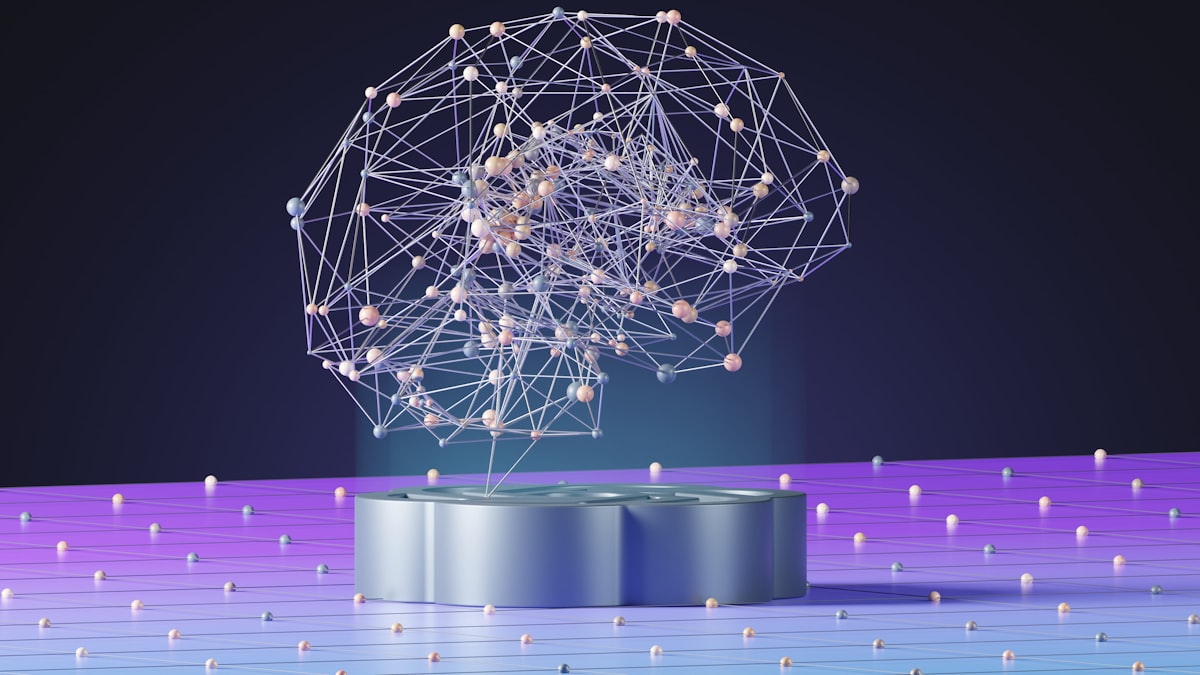
The term Artificial Intelligence (AI) refers to computer systems that are designed to perform tasks that normally require human intelligence. These tasks include learning, reasoning, understanding language, recognising images, solving problems, making recommendations, analysing information and assisting people in making decisions.
The word Artificial means something that is created by humans rather than occurring naturally. The word Intelligence refers to the ability to acquire knowledge, understand information, learn from experience, solve problems and make decisions.
When these two words are combined, Artificial Intelligence simply means creating computer systems that are capable of performing intelligent tasks similar to those carried out by humans.
It is important to understand that today's Artificial Intelligence does not think or feel like a human being. Instead, it analyses enormous amounts of data, recognises patterns and predicts the most appropriate response based on the information it has learned during training.
For example, when you ask ChatGPT a question, it does not search the internet every time. Instead, it predicts the most suitable response by analysing patterns it learned from vast amounts of information during its training process.
Human intelligence develops naturally through education, observation, experience and interaction with the surrounding environment. Humans are capable of emotions, creativity, ethical judgement, imagination and common sense.
Artificial Intelligence, on the other hand, depends entirely on data, algorithms and mathematical models. AI can process enormous quantities of information in seconds and perform repetitive tasks without becoming tired. However, AI does not possess emotions, personal experiences, consciousness or genuine understanding in the same way humans do.
This is why AI should be viewed as an intelligent assistant rather than a replacement for human intelligence. The best results are achieved when humans and AI work together, combining human creativity and judgement with the speed and analytical capabilities of AI.
Many people believe they have never used Artificial Intelligence. In reality, most people interact with AI dozens of times every day.
Some common examples include:
📱 Face Unlock on your smartphone.
🎵 Music recommendations on Spotify.
🎬 Movie recommendations on Netflix.
📧 Spam detection inside your email.
🚗 Google Maps suggesting the fastest route.
🛒 Online shopping recommendations.
🏦 Fraud detection performed by banks.
🎤 Voice assistants such as Siri, Google Assistant and Alexa.
💬 AI chatbots that answer customer support questions.
These systems quietly analyse information and assist users every day without requiring them to understand the underlying technology.
🤖 AI Fact: Many people think Artificial Intelligence is only ChatGPT. In reality, ChatGPT is just one example of Generative AI. Thousands of AI systems operate behind the scenes in hospitals, airports, banks, universities, supermarkets, mobile phones, vehicles and cybersecurity centres around the world.
Take five minutes to think about your daily routine.
List at least ten situations where you believe Artificial Intelligence may already be assisting you without your knowledge.
Discuss your answers with your classmates and compare your observations. You may discover many AI applications that you had never previously recognised.

Artificial Intelligence did not appear overnight. It is the result of decades of research, scientific discoveries, technological innovation and human curiosity. The intelligent systems we use today were built upon ideas that scientists and mathematicians began developing more than seventy years ago.
Understanding the history of Artificial Intelligence helps us appreciate how far technology has progressed and why AI has become one of the most important innovations of the twenty-first century.
Every generation has contributed something unique to the development of AI. Early researchers focused on making computers perform simple calculations. Today's researchers are developing systems capable of understanding language, generating images, writing computer programs, analysing medical records and assisting professionals in almost every industry.
Long before computers existed, people imagined machines capable of thinking like humans. Ancient civilizations told stories about mechanical servants and intelligent robots. Although these stories were fictional, they demonstrated humanity's long-standing fascination with creating intelligent machines.
The idea became more realistic during the twentieth century as electronic computers were invented. Scientists began asking an important question:
"Can a machine be taught to think?"
This simple question became the foundation of Artificial Intelligence research.

One of the most influential people in the history of computing was the British mathematician Alan Turing.
In 1950, Turing published a famous research paper titled "Computing Machinery and Intelligence."
Instead of asking whether machines could think, he proposed another question:
"Can machines imitate human intelligence so well that people cannot tell the difference?"
To answer this question, Turing introduced what later became known as the Turing Test.
In the Turing Test, a human communicates with both another human and a computer without knowing which is which. If the human cannot reliably identify the computer, the machine is considered to have demonstrated intelligent behaviour.
Although modern AI has moved beyond the original Turing Test, Alan Turing's ideas remain one of the foundations of Artificial Intelligence research.
The term Artificial Intelligence was officially introduced in 1956 during a research workshop held at Dartmouth College in the United States.
A group of scientists gathered with the ambitious goal of creating machines capable of learning and solving problems like humans.
Although the technology available at the time was extremely limited, this meeting marked the official beginning of Artificial Intelligence as an academic field.
Researchers believed that intelligent machines would be created within only a few decades. However, they soon discovered that human intelligence was far more complex than they had imagined.
❄ AI Winter During several periods in history, funding for Artificial Intelligence research declined because computers were not yet powerful enough to achieve researchers' ambitious goals. These difficult periods became known as AI Winters. Despite these setbacks, scientists continued improving algorithms and collecting knowledge that eventually led to today's AI revolution.
If you had lived in 1956 and someone told you that one day a computer would write books, generate videos, create computer programs, assist doctors and answer questions in natural language, would you have believed them?
Today's Artificial Intelligence was once considered impossible. This reminds us that technology continues to evolve, and the innovations of tomorrow may seem unimaginable today.

By the 1990s and early 2000s, Artificial Intelligence entered a new phase known as Machine Learning. Instead of programming computers with every possible instruction, scientists developed systems capable of learning from data and improving their performance through experience.
Machine Learning introduced a completely different way of solving problems. Rather than telling a computer exactly what to do in every situation, developers supplied it with thousands or even millions of examples. The computer analysed those examples, discovered patterns and learned how to make predictions on its own.
For example, instead of programming a computer with thousands of rules explaining what a cat looks like, developers simply showed the computer millions of pictures labelled "cat" and "not cat." After analysing these images, the computer gradually learned how to recognise cats in new photographs with remarkable accuracy.
Today, Machine Learning powers many of the intelligent systems people use daily, including recommendation systems, fraud detection, language translation, spam filtering and facial recognition.
Artificial Intelligence depends heavily on data. Every search, online purchase, photograph, email, video, medical record and business transaction generates valuable information.
As internet usage increased around the world, organisations collected enormous amounts of information known as Big Data.
This massive growth in data allowed Artificial Intelligence systems to learn faster and become much more accurate than previous generations.
Without high-quality data, Artificial Intelligence cannot learn effectively. For this reason, data is often described as the fuel that powers Artificial Intelligence.

Around 2012, another major breakthrough occurred with the development of Deep Learning.
Deep Learning uses computer models called Artificial Neural Networks. These models were inspired by the structure of the human brain, although they are much simpler than biological neurons.
Deep Learning made it possible for computers to recognise speech, identify faces, translate languages, analyse medical images and understand natural language with far greater accuracy than before.
As computer hardware became faster and more powerful, Deep Learning models grew larger and more capable. This technological advancement paved the way for today's modern AI assistants.
The most significant transformation in recent years has been the emergence of Generative Artificial Intelligence.
Unlike earlier AI systems that focused mainly on analysing information, Generative AI can create entirely new content.
It can write essays, generate computer programs, design presentations, compose music, create realistic images, produce videos, summarise reports and answer questions in natural language.
This capability has dramatically changed how people learn, work and communicate. Professionals across education, business, healthcare, cybersecurity, engineering and creative industries now use Generative AI to improve productivity and solve complex problems more efficiently.
In recent years, powerful AI assistants such as ChatGPT, Gemini, Claude, Microsoft Copilot, Perplexity AI and Grok have introduced Artificial Intelligence to millions of people around the world.
For the first time, ordinary users could communicate with advanced AI systems using everyday language without requiring programming knowledge.
This accessibility has accelerated AI adoption in schools, universities, businesses, governments and households worldwide.
Today, Artificial Intelligence is no longer considered an experimental technology. It has become an essential productivity tool used by professionals in almost every industry.
🚀 AI Discovery #2
Open an AI assistant and ask:
"Explain the history of Artificial Intelligence as if you were teaching a 10-year-old child."
Then ask:
"Now explain the same topic as if you were teaching university students studying Computer Science."
Observe how AI changes its explanations depending on the audience. This demonstrates one of AI's greatest strengths—its ability to adapt communication to different knowledge levels.
Artificial Intelligence has evolved through decades of research, innovation and technological advancement. From Alan Turing's early vision of intelligent machines to today's powerful Generative AI systems, each stage has contributed to making AI one of the most transformative technologies in human history.
As computing power increased and vast amounts of data became available, AI systems evolved from solving simple mathematical problems to understanding language, recognising images, writing software, generating creative content and assisting professionals across countless industries.
The future of Artificial Intelligence will continue to evolve, creating new opportunities, new careers and new challenges. Understanding its history provides an important foundation for understanding where AI is heading next.

One of the biggest misconceptions about Artificial Intelligence is that it thinks exactly like a human being. In reality, AI does not possess emotions, consciousness or personal experiences. It does not "know" things in the same way people do.
Instead, Artificial Intelligence works by analysing enormous amounts of information, identifying patterns and predicting the most appropriate response based on what it has previously learned.
Think of AI as an extremely fast pattern recognition system. Instead of memorising a few examples, modern AI systems analyse billions of words, images, videos, sounds and documents during training.
Whenever you ask AI a question, it compares your request with everything it has learned and predicts the response that is most likely to satisfy your request.
Every Artificial Intelligence system begins with data.
Data is simply information.
Examples include:
📖 Books
📰 Newspapers
🌐 Websites
📷 Images
🎥 Videos
🎵 Audio recordings
📊 Spreadsheets
🏥 Medical records
💰 Financial transactions
Every day, billions of pieces of information are created around the world. AI learns by analysing this information and discovering useful relationships between different pieces of data.
Once enough data has been collected, engineers begin a process known as training.
Training is similar to teaching a student.
The more examples the student studies, the better they become at recognising patterns and answering questions correctly.
Similarly, AI systems analyse millions or billions of examples until they begin recognising relationships between words, images, numbers and ideas.
Training modern AI systems can take weeks or even months and requires thousands of powerful computers working together.
After training is completed, the knowledge learned by the AI is stored inside what is known as an AI Model.
The model is not a database containing ready-made answers.
Instead, it contains mathematical relationships that allow the AI to predict the next word, classify an image, generate computer code or answer a question.
Whenever you interact with ChatGPT or another AI assistant, you are communicating with one of these trained models.
Everything begins with a prompt.
A prompt is simply the instruction or question that you give to Artificial Intelligence.
Examples include:
• Explain cybersecurity.
• Write a professional business proposal.
• Create a lesson plan for Grade 8 Mathematics.
• Build an HTML webpage.
• Analyse this PDF document.
The quality of your prompt directly influences the quality of the response you receive.
Modern AI does not actually read entire sentences the same way humans do.
Instead, it breaks your message into smaller pieces known as tokens.
A token may be a complete word, part of a word, punctuation mark or even a number.
The AI analyses these tokens, predicts relationships between them and generates a response one token at a time.
Although users rarely notice this process, tokens are one of the most important building blocks of Generative AI.
💡 AI Secret #3
Professional AI users rarely ask short questions.
Instead of saying:
"Write a report."
They provide detailed instructions including:
Open your preferred AI assistant.
Ask the following prompt:
Write a report about Artificial Intelligence.
Now ask this improved prompt:
Act as a university professor teaching first-year Information Technology students. Write a professional report explaining Artificial Intelligence. Include: • Definition • History • Advantages • Disadvantages • Real-world applications • Future opportunities • Conclusion Use clear headings and examples.
Compare both responses. Discuss with your classmates why the second prompt produced a much higher-quality answer.
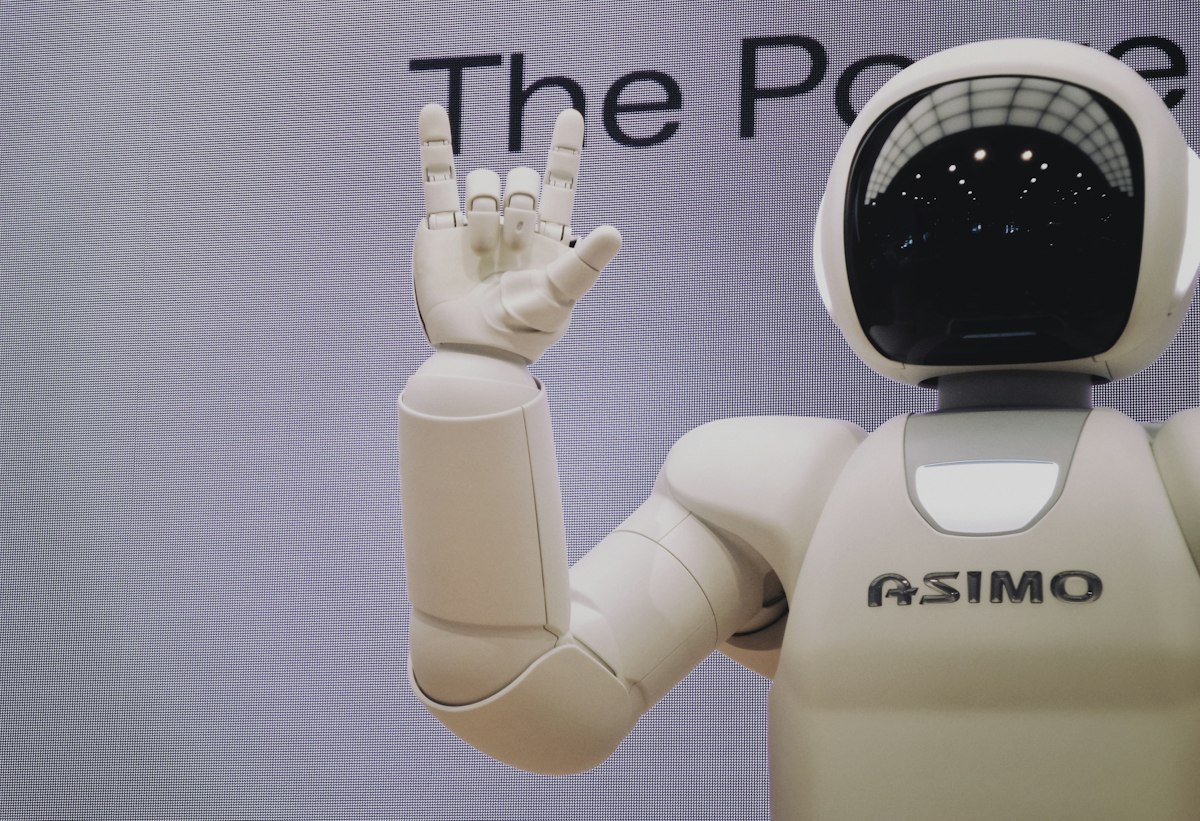
Not all Artificial Intelligence systems are equally intelligent. Some AI systems are designed to perform only one specific task, while researchers believe future AI may eventually perform almost every intellectual activity that humans can perform.
To better understand the capabilities of AI, researchers classify Artificial Intelligence into different categories based on what the system is capable of doing.
The three most commonly discussed categories are:
✔ Narrow Artificial Intelligence (ANI)
✔ Artificial General Intelligence (AGI)
✔ Artificial Super Intelligence (ASI)
Narrow Artificial Intelligence, sometimes called Weak AI, is designed to perform one specific task extremely well.
It cannot perform tasks outside the area for which it was created.
For example, a facial recognition system can identify faces, but it cannot drive a car or diagnose diseases.
Similarly, Google Maps can recommend the fastest route, but it cannot write a business proposal.
Almost every Artificial Intelligence application used today belongs to this category.
📱 Smartphone Face Unlock
🎬 Netflix Recommendations
🎵 Spotify Music Suggestions
📧 Gmail Spam Detection
🚗 Google Maps Navigation
💬 Chatbots
🏦 Banking Fraud Detection
🛒 Amazon Product Recommendations
📷 Camera Image Enhancement
🛡 Cybersecurity Threat Detection
Artificial General Intelligence refers to an AI system capable of performing any intellectual task that a human being can perform.
Unlike Narrow AI, AGI would be able to learn new skills without being specially programmed for every task.
An AGI system could solve mathematical problems, write software, teach students, conduct scientific research, create businesses, compose music and learn completely new subjects just like a human.
At present, true Artificial General Intelligence has not yet been achieved.
Many research organisations around the world are actively working towards this goal.
Artificial Super Intelligence represents a hypothetical future stage where AI becomes more intelligent than humans in every possible field.
Such a system would outperform the world's best scientists, doctors, engineers, programmers, artists and business leaders simultaneously.
Many experts believe this level of AI could transform civilisation dramatically.
Others believe it could introduce significant ethical and security challenges if not properly controlled.
Currently, Artificial Super Intelligence does not exist.
Narrow AI
• Exists today
• Performs one specialised task
• Cannot think like humans
Artificial General Intelligence
• Still under research
• Would learn almost any task
• Comparable to human intelligence
Artificial Super Intelligence
• Theoretical
• More intelligent than humans
• Does not currently exist
🧠 AI Secret #4 Many people believe ChatGPT is Artificial General Intelligence. It is not. Although ChatGPT appears intelligent and can perform many different tasks, it is still considered a form of Narrow Artificial Intelligence because it does not possess genuine understanding, self-awareness or independent consciousness.
Research five AI tools that you regularly use.
For each tool, identify:
• Its primary purpose.
• Which type of Artificial Intelligence it belongs to.
• How it improves productivity.
• One limitation of the tool.
Present your findings to the class and discuss whether you believe Artificial General Intelligence will become a reality within your lifetime.
🤔 Think Critically If computers one day become more intelligent than humans, what responsibilities should governments, businesses and society have to ensure that Artificial Intelligence is used safely, ethically and for the benefit of humanity? Discuss your answer with your classmates.

One of the biggest misconceptions among beginners is that Artificial Intelligence (AI), Machine Learning (ML), Deep Learning (DL), and Data Science all mean the same thing.
Although these fields are closely related, they have different purposes and responsibilities.
Understanding these differences will help you communicate professionally with employers, clients and other technology professionals.
Artificial Intelligence is the broad field of computer science focused on creating systems capable of performing tasks that normally require human intelligence.
Examples include:
✔ Chatbots
✔ Virtual Assistants
✔ Autonomous Vehicles
✔ Recommendation Systems
✔ Medical Diagnosis Systems
AI is the largest umbrella under which Machine Learning and Deep Learning exist.
Machine Learning is a branch of Artificial Intelligence.
Instead of programming every instruction manually, Machine Learning enables computers to learn patterns directly from data.
For example:
An email application can analyse thousands of spam emails and automatically learn how to recognise future spam messages.
The more examples it analyses, the more accurate it becomes.
Deep Learning is an advanced form of Machine Learning that uses Artificial Neural Networks with many processing layers.
Deep Learning has made it possible for computers to:
🎤 Understand speech.
📷 Recognise faces.
🚗 Drive autonomous vehicles.
🩺 Detect diseases from medical scans.
📝 Generate human-like text.
🎨 Create realistic images.
Modern AI assistants such as ChatGPT rely heavily on Deep Learning.
Data Science focuses on collecting, cleaning, analysing and interpreting data to help organisations make better decisions.
A Data Scientist spends much of their time working with information rather than building intelligent machines.
Data Scientists often use Machine Learning as one of many tools during analysis.
Their work helps businesses answer questions such as:
• Which products sell the most?
• Which customers are likely to leave?
• What trends are emerging?
• Which marketing campaign performs best?
Artificial Intelligence
The overall field of making computers perform intelligent tasks.
Machine Learning
Allows computers to learn from data without explicit programming.
Deep Learning
Uses complex neural networks to solve advanced problems such as speech, vision and language.
Data Science
Focuses on analysing data to generate useful information for decision making.
Imagine a hospital.
The hospital collects millions of patient records.
The Data Science team analyses these records to discover disease trends.
Machine Learning is then used to identify patterns associated with illnesses.
Deep Learning analyses medical X-rays and MRI scans.
Artificial Intelligence combines all these technologies into a complete intelligent healthcare system that assists doctors in diagnosing patients more quickly and accurately.
🚀 AI Discovery #5
Open your favourite AI assistant and ask:
Explain the difference between Artificial Intelligence, Machine Learning, Deep Learning and Data Science using a football team as an example.
Then ask the AI to explain the same topic using a farming example.
Notice how AI can adapt explanations for different audiences while keeping the concepts accurate.
Visit the websites of five technology companies.
Identify which of their products use:
✔ Artificial Intelligence
✔ Machine Learning
✔ Deep Learning
✔ Data Science
Prepare a one-page summary explaining your findings and present them during class discussion.
📝 Knowledge Check
Answer the following questions:
1. What is Artificial Intelligence?
2. How is Machine Learning different from Artificial Intelligence?
3. Why is Deep Learning considered a subset of Machine Learning?
4. What role does Data Science play in modern organisations?
5. Give one real-world example where all four technologies work together.

Artificial Intelligence is no longer a technology used only by scientists and large technology companies. Today, AI has become part of everyday life and is transforming almost every profession around the world.
Whether you are a teacher, doctor, engineer, accountant, lawyer, farmer, software developer or entrepreneur, Artificial Intelligence has the potential to improve productivity, reduce repetitive work and support better decision-making.
Many organisations now consider AI skills to be among the most valuable workplace competencies. Employees who understand how to work with AI often complete tasks more efficiently and create higher-quality results than those who rely only on traditional methods.
As an IT International Academy student, your goal is not simply to understand AI but to learn how to apply it professionally in your chosen career.
Artificial Intelligence is changing how students learn and how teachers prepare lessons.
Examples include:
📚 Personalised tutoring
📝 Automatic quiz generation
📖 Lesson planning
🌍 Language translation
🎓 Research assistance
📊 Student performance analysis
AI enables learners to receive instant explanations, practice exercises and personalised study plans based on their learning needs.
Hospitals around the world are increasingly using Artificial Intelligence to support healthcare professionals.
Examples include:
🩺 Disease prediction
🧬 Medical image analysis
💊 Drug discovery
📅 Appointment scheduling
❤️ Patient monitoring
Although doctors continue making final medical decisions, AI helps them analyse information more quickly and accurately.
Businesses use Artificial Intelligence to improve efficiency, reduce costs and increase customer satisfaction.
Examples include:
📈 Sales forecasting
💬 Customer support chatbots
📧 Marketing automation
📦 Inventory management
💹 Business intelligence
Companies that successfully adopt AI often gain a competitive advantage over organisations that continue using only manual processes.
Cybersecurity professionals use Artificial Intelligence to identify threats much faster than humans alone.
AI systems can:
🛡 Detect malware
🚨 Identify suspicious network traffic
🔒 Detect unusual login attempts
📊 Analyse millions of security events
⚠ Predict possible cyber attacks
Modern Security Operations Centres (SOCs) rely heavily on AI to reduce investigation time and improve incident response.
Artificial Intelligence is helping farmers increase productivity while reducing waste.
Examples include:
🌱 Crop monitoring
🚜 Smart farming equipment
💧 Irrigation management
🐄 Livestock monitoring
🌦 Weather prediction
These technologies help farmers produce more food while using fewer resources.
Banks process millions of financial transactions every day.
Artificial Intelligence assists financial institutions by detecting fraudulent transactions, analysing spending behaviour, assessing loan applications and improving customer service.
Many mobile banking applications already use AI to monitor unusual account activity and alert customers immediately.
Transport companies use Artificial Intelligence to optimise routes, reduce fuel consumption and improve passenger safety.
Examples include:
🚗 Self-driving vehicle research
🚦 Traffic management
📍 GPS navigation
✈ Flight scheduling
🚢 Shipping logistics
💰 AI Career Secret You do not need to become a programmer to benefit from Artificial Intelligence. Teachers use AI. Lawyers use AI. Doctors use AI. Accountants use AI. Business owners use AI. Graphic designers use AI. Content creators use AI. Cybersecurity analysts use AI. The people who understand how to work with AI will often complete tasks faster, produce better work and create new business opportunities.
Choose one profession that interests you.
Research and identify at least five ways Artificial Intelligence is changing that profession.
Prepare a five-minute presentation explaining:
• How AI is currently being used.
• The advantages.
• The possible disadvantages.
• The future of AI in that profession.
🚀 AI Discovery #6
Open your favourite AI assistant and ask:
"I want to become a professional ____________. Explain how Artificial Intelligence can help me become one of the best professionals in this field."
Replace the blank with your dream career.
Read the response carefully.
You may discover opportunities you never knew existed.

One of the biggest reasons millions of people are learning Artificial Intelligence today is because it creates entirely new opportunities to earn income.
AI is not just another technology trend. It has become a powerful business tool that allows individuals to work faster, provide better services, start businesses with very little capital and reach customers anywhere in the world.
Whether you are a student, employee, entrepreneur or freelancer, Artificial Intelligence can help you increase your productivity and create new streams of income.
The goal is not to let AI do all the work. Instead, AI becomes your intelligent assistant, helping you complete projects in less time while maintaining high quality.
Many freelancers now use AI to provide services faster and more professionally.
Examples include:
✍ Writing articles and blog posts.
🎨 Designing social media graphics.
🌐 Building websites.
📊 Creating business presentations.
📧 Writing professional emails.
📄 Producing business proposals.
By combining personal skills with AI, freelancers can complete more work in less time and increase their income.
Artificial Intelligence has reduced many of the barriers to starting a business.
Today, one person with a laptop or smartphone can use AI to:
✔ Develop business ideas.
✔ Design logos.
✔ Build websites.
✔ Create advertisements.
✔ Write marketing content.
✔ Produce business documents.
✔ Analyse competitors.
This means entrepreneurs can launch businesses much faster than before.
Content creators are using AI every day to produce high-quality digital content.
Examples include:
🎥 YouTube videos.
🎙 Podcasts.
📱 TikTok videos.
📸 Instagram posts.
📚 eBooks.
🎓 Online courses.
AI helps creators generate ideas, write scripts, improve images and organise content while allowing the creator to focus on creativity and originality.
Artificial Intelligence should always be used ethically and responsibly.
Never use AI to cheat during examinations, create fake information, impersonate other people or violate copyright laws.
Professional AI users always review, verify and improve AI-generated work before sharing it with clients, employers or the public.
Remember: AI should enhance your abilities—not replace your responsibility.
🚀 AI Discovery #7
Open your favourite AI assistant and ask:
"I am a student with only a smartphone and internet access.
Suggest 20 ethical ways I can start earning money using Artificial Intelligence."
Save the response.
Throughout this course you will learn many of these methods in practical sessions.
Congratulations! You have completed Module 1.
In this module you have learned:
✔ What Artificial Intelligence is.
✔ The history and evolution of AI.
✔ How AI works.
✔ Types of Artificial Intelligence.
✔ AI, Machine Learning, Deep Learning and Data Science.
✔ Real-world applications of AI.
✔ How AI is creating new career and business opportunities.
In the next module, you will begin working directly with modern AI tools and learn how professionals communicate with AI using advanced prompt engineering techniques.